Leopard/sulcata starter

Littleredfootbigredheart

Well-Known Member
Joined
Dec 28, 2023
Messages
7,679
Location (City and/or State)
UK
Hello there!
In this thread I’m going to include some information below on how I’d personally tackle an indoor starter set up for a leopard/sulcata until they’re bigger. Hopefully it helps give people some ideas!”

I know it looks like a lot to go over, I like to make sure all bases are covered, I’m happy to break down any information as and where needed, just ask!
Also please note, I’m not the most knowledgeable on these species specifically, but have a good idea on the basics of an effective starter set up.
If more knowledgeable members on these species want to add/change some of the advice, please do!

Care advice for these guys is painfully behind, fb pages, YouTube, pet stores, they’re all repeating the same outdated advice, this forum is made of people who have spent years finding the best ways to care for them that actually result in healthy tortoise, I’ve taken the knowledge of these lovely folks and applied it into making this thread.

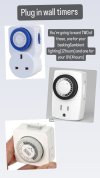
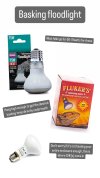
Basking light should be an incandescent floodlight(examples attached) on a 12 hour timer.

Basking temperature directly under the floodlight should be 95-100f. The rest of the enclosure should be ranging 80-85(though I believe leopards like it a bit warmer)not dropping lower than 80 at night all over, you’ll likely need a CHE(ceramic heat emitter) to achieve this.

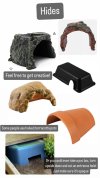
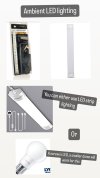
You may also wish to add ambient lighting on the same timer as the basking light, providing shady areas with hides and such.

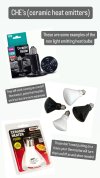
If the floodlight isn’t enough to bump up the over enclosure temperature, you could add a CHE(ceramic heat emitter)or two depending on the size you go for, they’re a non light emitting heat bulb that people use to help make up ambient heat/ night heat. If dropping below the 80’s at night, a CHE is a good must.

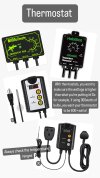
Always run any ceramic bulbs on a thermostat, you’ll set the thermostat for around 80, plug the ceramic(s) into the thermostat and plug the thermostat into the mains, it’ll be on 24/7, but the thermostat will only turn on the ceramic(s) if the temperature drops below 80, and will keep them off if the temperature is fine.

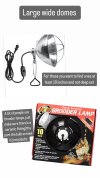
Large wide domes(not deep) with ceramic fittings will help in projecting the heat down, just make sure to never solely rely on the clamp fittings that can come with them, they can fail, so it’s always best to hang them securely👍

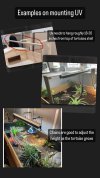
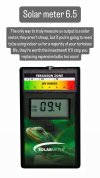
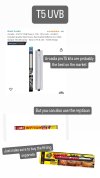
Any indoor Uv should be a t5 fluorescent tube, avoid the compact and coil uv bulbs, they don’t give out enough uv and can hurt the tortoises eyes. The uv can be on a 4 hour timer from noon. I’ve attached the two brands to go for with examples on how to mount/hang them. The Arcadia prot5 kit 12% comes with the reflector fitting, the reptisun needs it buying separately.

With lighting always avoid anything labelled halogen or mercury vapour.

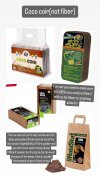
For substrates, either coco coir, dampened and packed down by hand as a base, with a layer of orchid bark or forest floor on top, or just the orchid bark/forest floor. Never use anything with sand mixed in, no top soils and no kinds of moss. The trouble with top soil is you don’t know what kind of plants have gone into it, they could be toxic. Sand and moss are impaction risks.

You want to aim to have the bottom layer of substrate damp, to do this pour lukewarm water into the corners, not loads but enough to dampen the entire bottom layer. To stop that top layer getting too dry/dusty, mix the substrate now n then, which also helps boosting humidity or give the top a spray. Check your monitors and substrate to do the pours as and when needed. I don’t recommend misters or foggers, they get the air too wet and cause respiratory problems.

Humidity for young growing tortoises benefits when maintained around 80%+ 24/7, you’ll find that difficult to achieve with an open top, even if from a naturally humid environment, it’s hard to maintain the humidity a hatchling needs indoors without a top. For the set up I’m recommending I’d get a greenhouse cover.

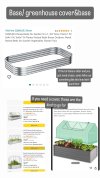
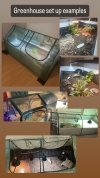
To maintain humidity whilst the tortoise is younger a greenhouse style set up works well and provides more space, the bigger you go the better, it’s ideal if you can build your own base to go as big as you can for the room you have.

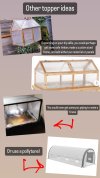
If you can’t find an exact fit for your base with the cover, then place it over like the one with the white base in one of the photos, I’d put lining down under the base and cover though to stop condensate getting on your floor. Bear in mind the ones pictured I don’t think are personally big enough to house this tortoise, they’re just to give you an idea.

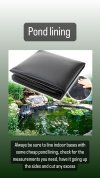
When making your base, just make sure the material is safe, some use flower beds or just make their own, for both these options I’d line with cheap pond liner to protect the base, making sure the liner goes up the sides too and make sure those sides are deep enough to prevent escapes.

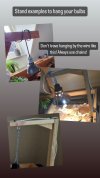
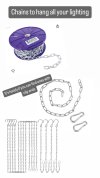
Some people even hang their lighting from the greenhouse frame!(if it feels sturdy enough) Simply wrap the wire round so it’s at the height you need(check with temp gun/put thermostat in, 18-21 inches from top of the tortoises shell for uv I recommend) then secure with cable ties and chains.

I’ve also included examples of stands people make/buy.

I think for the size you’ll need to go, you may struggle to find a topper, in that case you could maybe throw some pvc covering over the stands if you can’t find one, but again if you do that, I’d put lining down under the base to stop condensate. Or perhaps even some sort of pollytunnle.

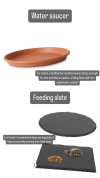
For a water dish a shallow terracotta saucer large enough for the tortoise to soak in, is considered safest, they have grip in the event your tortoise flips themselves, most pet store options are a known hazard.

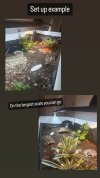
Ignore whatever else is in these enclosures in the photos, they’re just to give you an idea, and again these particular ones look too small for the species imo to last long, but hopefully they help inspire an idea👍

I’d also always recommend getting your hands on a temp gun, they’re SO handy when setting up a new environment or for checking your monitors are correct🙂

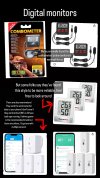
Have digital monitors that measure both temp and humidity, the gauge ones are inaccurate.

As this is a closed chamber set up, I’d recommend letting the materials off gas for about a week or until there is no odour

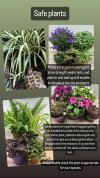
For the diet side of things, avoid fruits, You want to stick with leafy greens, weeds and safe flowers for these guys, perhaps some of you will find this link below useful, maybe you could get some seeds offline and plant into organic soil(no fertilisers or chemicals) in a planter the tortoise doesn’t have access to, forage them as they grow😊be very wary foraging elsewhere, you can’t be sure there’s no chemicals and they’re toxic lookalikes so always double check.

0C4C77CB-C7C5-4D04-B6EA-A8DDED69180E.jpeg
26FED8E6-EC3A-41E5-8B29-161C81754F69.jpeg
06B98E98-21A1-49B8-969A-7D3E9AA4A6E5.jpeg
3DF8B82E-36C7-4C04-9E8B-BFEEA73DA5A4.jpeg
9C215A22-90A2-43E7-AC00-35851730FABB.jpeg
6618C181-9F68-441F-85AF-BA616974135F.jpeg
34787739-23CD-4A6C-A073-C037E895EB5D.jpeg
F7657A7A-2E27-4834-856C-9CED2E3A18B0.jpeg
819B0BB7-6719-4C09-BA60-EF68CEB89124.jpeg
1D970D47-AAA5-4A3D-ABCE-3A303A73508D.jpeg
B6905FEF-D0D0-40D0-9C78-C271DA4A6626.jpeg
77381963-858F-4DB4-934A-2E8334AB0C4D.jpeg
509CA0FB-51DE-4B23-9D5D-D950FE74D589.jpeg
4C366FAA-9335-4DE3-B2A1-B921719E9153.jpeg
C7B0F668-D9BD-4597-94A5-C05EB3B73D51.jpeg
CB46CF40-CA22-48AF-A206-1C4466DA2A0D.jpeg
42BB6CA0-F6A8-4089-AA60-53009A8E2944.jpeg
8314473E-F90C-457C-8359-CCC7F4C7E96F.jpeg
17752156-AB42-408E-9E0E-E786707348F5.jpeg
C3FA11B0-04EB-440D-8996-14A8EA983A4D.jpeg
82589CE6-72C8-4C36-9425-A0B884E03E98.jpeg
EE9641DC-B5F6-4124-91C6-1B0E4052C8FC.jpeg
A15657BB-9428-4AD5-A12E-735FB85F7160.jpeg
0C8B96BD-D337-464A-B3C0-65AD595115F8.jpeg
 
Last edited by a moderator:

Littleredfootbigredheart

Well-Known Member
Joined
Dec 28, 2023
Messages
7,679
Location (City and/or State)
UK
Sulcata and leopards temperature should not go below 80F day and night.
Basking temperature directly under the floodlight should be 95-100f. The rest of the enclosure should be ranging 80-85(though I believe leopards like it a bit warmer)not dropping lower than 80 at night all over, you’ll likely need a CHE(ceramic heat emitter) to achieve this.


If the floodlight isn’t enough to bump up the over enclosure temperature, you could add a CHE(ceramic heat emitter)or two depending on the size you go for, they’re a non light emitting heat bulb that people use to help make up ambient heat/ night heat. If dropping below the 80’s at night, a CHE is a good must.

Always run any ceramic bulbs on a thermostat, you’ll set the thermostat for around 80, plug the ceramic(s) into the thermostat and plug the thermostat into the mains, it’ll be on 24/7, but the thermostat will only turn on the ceramic(s) if the temperature drops below 80, and will keep them off if the temperature is fine.
Hopefully the way I’ve worded it isn’t confusing
 

wellington

Well-Known Member
Moderator
10 Year Member!
Tortoise Club
Platinum Tortoise Club
Joined
Sep 6, 2011
Messages
53,937
Location (City and/or State)
Chicago, Illinois, USA
Hopefully the way I’ve worded it isn’t confusing
Yes I did read it right. However it could be misleading that leopards might like it warmer but Sulcatas not.
They both should not go below 80, doesn't have to be warmer for leopards.
 

Littleredfootbigredheart

Well-Known Member
Joined
Dec 28, 2023
Messages
7,679
Location (City and/or State)
UK
Yes I did read it right. However it could be misleading that leopards might like it warmer but Sulcatas not.
They both should not go below 80, doesn't have to be warmer for leopards.
Oh for that I meant during their day temps I believe leopards like it that little bit warmer? I could be wrong?
Didn’t mean to imply one likes it warmer than the other at night, sorry for the confusion😣
 

LittleLove

Active Member
Joined
Aug 20, 2024
Messages
224
Location (City and/or State)
Arizona
Hello there!

In this thread I’m going to include some information below on how I’d personally tackle an indoor starter set up for this guy until they’re bigger. Hopefully it helps give you some ideas!

I know it looks a lot to go over, I like to make sure all bases are covered, I’m happy to break down any information as and where needed, just ask!
Also please note, I’m not the most knowledgeable on these species specifically, but have a good idea on the basics of an effective starter set up.
If more knowledgeable members on these species want to add/change some of the advice, please do!

Care advice for these guys is painfully behind, fb pages, YouTube, pet stores, they’re all repeating the same outdated advice, this forum is made of people who have spent years finding the best ways to care for them that actually result in healthy tortoise, I’ve taken the knowledge of these lovely folks and applied it into making this thread.

Basking light should be an incandescent floodlight(examples attached) on a 12 hour timer.

Basking temperature directly under the floodlight should be 95-100f. The rest of the enclosure should be ranging 80-85(though I believe leopards like it a bit warmer)not dropping lower than 80 at night all over, you’ll likely need a CHE(ceramic heat emitter) to achieve this.

You may also wish to add ambient lighting on the same timer as the basking light, providing shady areas with hides and such.

If the floodlight isn’t enough to bump up the over enclosure temperature, you could add a CHE(ceramic heat emitter)or two depending on the size you go for, they’re a non light emitting heat bulb that people use to help make up ambient heat/ night heat. If dropping below the 80’s at night, a CHE is a good must.

Always run any ceramic bulbs on a thermostat, you’ll set the thermostat for around 80, plug the ceramic(s) into the thermostat and plug the thermostat into the mains, it’ll be on 24/7, but the thermostat will only turn on the ceramic(s) if the temperature drops below 80, and will keep them off if the temperature is fine.

Large wide domes(not deep) with ceramic fittings will help in projecting the heat down, just make sure to never solely rely on the clamp fittings that can come with them, they can fail, so it’s always best to hang them securely👍

Any indoor Uv should be a t5 fluorescent tube, avoid the compact and coil uv bulbs, they don’t give out enough uv and can hurt the tortoises eyes. The uv can be on a 4 hour timer from noon. I’ve attached the two brands to go for with examples on how to mount/hang them. The Arcadia prot5 kit 12% comes with the reflector fitting, the reptisun needs it buying separately.

With lighting always avoid anything labelled halogen or mercury vapour.

For substrates, either coco coir, dampened and packed down by hand as a base, with a layer of orchid bark or forest floor on top, or just the orchid bark/forest floor. Never use anything with sand mixed in, no top soils and no kinds of moss. The trouble with top soil is you don’t know what kind of plants have gone into it, they could be toxic. Sand and moss are impaction risks.

You want to aim to have the bottom layer of substrate damp, to do this pour lukewarm water into the corners, not loads but enough to dampen the entire bottom layer. To stop that top layer getting too dry/dusty, mix the substrate now n then, which also helps boosting humidity or give the top a spray. Check your monitors and substrate to do the pours as and when needed. I don’t recommend misters or foggers, they get the air too wet and cause respiratory problems.

Humidity for young growing tortoises benefits when maintained around 80%+ 24/7, you’ll find that difficult to achieve with an open top, even if from a naturally humid environment, it’s hard to maintain the humidity a hatchling needs indoors without a top. For the set up I’m recommending I’d get a greenhouse cover.

To maintain humidity whilst the tortoise is younger a greenhouse style set up works well and provides more space, the bigger you go the better, it’s ideal if you can build your own base to go as big as you can for the room you have.

If you can’t find an exact fit for your base with the cover, then place it over like the one with the white base in one of the photos, I’d put lining down under the base and cover though to stop condensate getting on your floor. Bear in mind the ones pictured I don’t think are personally big enough to house this tortoise, they’re just to give you an idea.

When making your base, just make sure the material is safe, some use flower beds or just make their own, for both these options I’d line with cheap pond liner to protect the base, making sure the liner goes up the sides too and make sure those sides are deep enough to prevent escapes.

Some people even hang their lighting from the greenhouse frame!(if it feels sturdy enough) Simply wrap the wire round so it’s at the height you need(check with temp gun/put thermostat in, 18-21 inches from top of the tortoises shell for uv I recommend) then secure with cable ties and chains.

I’ve also included examples of stands people make/buy.

I think for the size you’ll need to go, you may struggle to find a topper, in that case you could maybe throw some pvc covering over the stands if you can’t find one, but again if you do that, I’d put lining down under the base to stop condensate. Or perhaps even some sort of pollytunnle.

For a water dish a shallow terracotta saucer large enough for the tortoise to soak in, is considered safest, they have grip in the event your tortoise flips themselves, most pet store options are a known hazard.

Ignore whatever else is in these enclosures in the photos, they’re just to give you an idea, and again these particular ones look too small for the species imo to last long, but hopefully they help inspire an idea👍

I’d also always recommend getting your hands on a temp gun, they’re SO handy when setting up a new environment or for checking your monitors are correct🙂

Have digital monitors that measure both temp and humidity, the gauge ones are inaccurate.

As this is a closed chamber set up, I’d recommend letting the materials off gas for about a week or until there is no odour

For the diet side of things, avoid fruits, You want to stick with leafy greens, weeds and safe flowers for these guys, perhaps some of you will find this link below useful, maybe you could get some seeds offline and plant into organic soil(no fertilisers or chemicals) in a planter the tortoise doesn’t have access to, forage them as they grow😊be very wary foraging elsewhere, you can’t be sure there’s no chemicals and they’re toxic lookalikes so always double check.

View attachment 377088
View attachment 377089
View attachment 377090
View attachment 377091
View attachment 377092
View attachment 377093
View attachment 377094
View attachment 377095
View attachment 377096
View attachment 377097
View attachment 377098
View attachment 377099
View attachment 377100
View attachment 377101
View attachment 377102
View attachment 377103
View attachment 377104
View attachment 377105
View attachment 377106
View attachment 377107
View attachment 377108
View attachment 377109
View attachment 377110
View attachment 377111
Thank You sooooo much for all of this. 😊
 

nickhuds

New Member
Joined
Sep 30, 2024
Messages
4
Location (City and/or State)
Illinois
Hello there!

In this thread I’m going to include some information below on how I’d personally tackle an indoor starter set up for this guy until they’re bigger. Hopefully it helps give you some ideas!

I know it looks a lot to go over, I like to make sure all bases are covered, I’m happy to break down any information as and where needed, just ask!
Also please note, I’m not the most knowledgeable on these species specifically, but have a good idea on the basics of an effective starter set up.
If more knowledgeable members on these species want to add/change some of the advice, please do!

Care advice for these guys is painfully behind, fb pages, YouTube, pet stores, they’re all repeating the same outdated advice, this forum is made of people who have spent years finding the best ways to care for them that actually result in healthy tortoise, I’ve taken the knowledge of these lovely folks and applied it into making this thread.

Basking light should be an incandescent floodlight(examples attached) on a 12 hour timer.

Basking temperature directly under the floodlight should be 95-100f. The rest of the enclosure should be ranging 80-85(though I believe leopards like it a bit warmer)not dropping lower than 80 at night all over, you’ll likely need a CHE(ceramic heat emitter) to achieve this.

You may also wish to add ambient lighting on the same timer as the basking light, providing shady areas with hides and such.

If the floodlight isn’t enough to bump up the over enclosure temperature, you could add a CHE(ceramic heat emitter)or two depending on the size you go for, they’re a non light emitting heat bulb that people use to help make up ambient heat/ night heat. If dropping below the 80’s at night, a CHE is a good must.

Always run any ceramic bulbs on a thermostat, you’ll set the thermostat for around 80, plug the ceramic(s) into the thermostat and plug the thermostat into the mains, it’ll be on 24/7, but the thermostat will only turn on the ceramic(s) if the temperature drops below 80, and will keep them off if the temperature is fine.

Large wide domes(not deep) with ceramic fittings will help in projecting the heat down, just make sure to never solely rely on the clamp fittings that can come with them, they can fail, so it’s always best to hang them securely👍

Any indoor Uv should be a t5 fluorescent tube, avoid the compact and coil uv bulbs, they don’t give out enough uv and can hurt the tortoises eyes. The uv can be on a 4 hour timer from noon. I’ve attached the two brands to go for with examples on how to mount/hang them. The Arcadia prot5 kit 12% comes with the reflector fitting, the reptisun needs it buying separately.

With lighting always avoid anything labelled halogen or mercury vapour.

For substrates, either coco coir, dampened and packed down by hand as a base, with a layer of orchid bark or forest floor on top, or just the orchid bark/forest floor. Never use anything with sand mixed in, no top soils and no kinds of moss. The trouble with top soil is you don’t know what kind of plants have gone into it, they could be toxic. Sand and moss are impaction risks.

You want to aim to have the bottom layer of substrate damp, to do this pour lukewarm water into the corners, not loads but enough to dampen the entire bottom layer. To stop that top layer getting too dry/dusty, mix the substrate now n then, which also helps boosting humidity or give the top a spray. Check your monitors and substrate to do the pours as and when needed. I don’t recommend misters or foggers, they get the air too wet and cause respiratory problems.

Humidity for young growing tortoises benefits when maintained around 80%+ 24/7, you’ll find that difficult to achieve with an open top, even if from a naturally humid environment, it’s hard to maintain the humidity a hatchling needs indoors without a top. For the set up I’m recommending I’d get a greenhouse cover.

To maintain humidity whilst the tortoise is younger a greenhouse style set up works well and provides more space, the bigger you go the better, it’s ideal if you can build your own base to go as big as you can for the room you have.

If you can’t find an exact fit for your base with the cover, then place it over like the one with the white base in one of the photos, I’d put lining down under the base and cover though to stop condensate getting on your floor. Bear in mind the ones pictured I don’t think are personally big enough to house this tortoise, they’re just to give you an idea.

When making your base, just make sure the material is safe, some use flower beds or just make their own, for both these options I’d line with cheap pond liner to protect the base, making sure the liner goes up the sides too and make sure those sides are deep enough to prevent escapes.

Some people even hang their lighting from the greenhouse frame!(if it feels sturdy enough) Simply wrap the wire round so it’s at the height you need(check with temp gun/put thermostat in, 18-21 inches from top of the tortoises shell for uv I recommend) then secure with cable ties and chains.

I’ve also included examples of stands people make/buy.

I think for the size you’ll need to go, you may struggle to find a topper, in that case you could maybe throw some pvc covering over the stands if you can’t find one, but again if you do that, I’d put lining down under the base to stop condensate. Or perhaps even some sort of pollytunnle.

For a water dish a shallow terracotta saucer large enough for the tortoise to soak in, is considered safest, they have grip in the event your tortoise flips themselves, most pet store options are a known hazard.

Ignore whatever else is in these enclosures in the photos, they’re just to give you an idea, and again these particular ones look too small for the species imo to last long, but hopefully they help inspire an idea👍

I’d also always recommend getting your hands on a temp gun, they’re SO handy when setting up a new environment or for checking your monitors are correct🙂

Have digital monitors that measure both temp and humidity, the gauge ones are inaccurate.

As this is a closed chamber set up, I’d recommend letting the materials off gas for about a week or until there is no odour

For the diet side of things, avoid fruits, You want to stick with leafy greens, weeds and safe flowers for these guys, perhaps some of you will find this link below useful, maybe you could get some seeds offline and plant into organic soil(no fertilisers or chemicals) in a planter the tortoise doesn’t have access to, forage them as they grow😊be very wary foraging elsewhere, you can’t be sure there’s no chemicals and they’re toxic lookalikes so always double check.

View attachment 377088
View attachment 377089
View attachment 377090
View attachment 377091
View attachment 377092
View attachment 377093
View attachment 377094
View attachment 377095
View attachment 377096
View attachment 377097
View attachment 377098
View attachment 377099
View attachment 377100
View attachment 377101
View attachment 377102
View attachment 377103
View attachment 377104
View attachment 377105
View attachment 377106
View attachment 377107
View attachment 377108
View attachment 377109
View attachment 377110
View attachment 377111
Amazing! Thank you!
 

Noahs Dad

New Member
Joined
Jun 28, 2025
Messages
13
Location (City and/or State)
Minnesota
Hello there!
In this thread I’m going to include some information below on how I’d personally tackle an indoor starter set up for a leopard/sulcata until they’re bigger. Hopefully it helps give people some ideas!”

I know it looks like a lot to go over, I like to make sure all bases are covered, I’m happy to break down any information as and where needed, just ask!
Also please note, I’m not the most knowledgeable on these species specifically, but have a good idea on the basics of an effective starter set up.
If more knowledgeable members on these species want to add/change some of the advice, please do!

Care advice for these guys is painfully behind, fb pages, YouTube, pet stores, they’re all repeating the same outdated advice, this forum is made of people who have spent years finding the best ways to care for them that actually result in healthy tortoise, I’ve taken the knowledge of these lovely folks and applied it into making this thread.

Basking light should be an incandescent floodlight(examples attached) on a 12 hour timer.

Basking temperature directly under the floodlight should be 95-100f. The rest of the enclosure should be ranging 80-85(though I believe leopards like it a bit warmer)not dropping lower than 80 at night all over, you’ll likely need a CHE(ceramic heat emitter) to achieve this.

You may also wish to add ambient lighting on the same timer as the basking light, providing shady areas with hides and such.

If the floodlight isn’t enough to bump up the over enclosure temperature, you could add a CHE(ceramic heat emitter)or two depending on the size you go for, they’re a non light emitting heat bulb that people use to help make up ambient heat/ night heat. If dropping below the 80’s at night, a CHE is a good must.

Always run any ceramic bulbs on a thermostat, you’ll set the thermostat for around 80, plug the ceramic(s) into the thermostat and plug the thermostat into the mains, it’ll be on 24/7, but the thermostat will only turn on the ceramic(s) if the temperature drops below 80, and will keep them off if the temperature is fine.

Large wide domes(not deep) with ceramic fittings will help in projecting the heat down, just make sure to never solely rely on the clamp fittings that can come with them, they can fail, so it’s always best to hang them securely👍

Any indoor Uv should be a t5 fluorescent tube, avoid the compact and coil uv bulbs, they don’t give out enough uv and can hurt the tortoises eyes. The uv can be on a 4 hour timer from noon. I’ve attached the two brands to go for with examples on how to mount/hang them. The Arcadia prot5 kit 12% comes with the reflector fitting, the reptisun needs it buying separately.

With lighting always avoid anything labelled halogen or mercury vapour.

For substrates, either coco coir, dampened and packed down by hand as a base, with a layer of orchid bark or forest floor on top, or just the orchid bark/forest floor. Never use anything with sand mixed in, no top soils and no kinds of moss. The trouble with top soil is you don’t know what kind of plants have gone into it, they could be toxic. Sand and moss are impaction risks.

You want to aim to have the bottom layer of substrate damp, to do this pour lukewarm water into the corners, not loads but enough to dampen the entire bottom layer. To stop that top layer getting too dry/dusty, mix the substrate now n then, which also helps boosting humidity or give the top a spray. Check your monitors and substrate to do the pours as and when needed. I don’t recommend misters or foggers, they get the air too wet and cause respiratory problems.

Humidity for young growing tortoises benefits when maintained around 80%+ 24/7, you’ll find that difficult to achieve with an open top, even if from a naturally humid environment, it’s hard to maintain the humidity a hatchling needs indoors without a top. For the set up I’m recommending I’d get a greenhouse cover.

To maintain humidity whilst the tortoise is younger a greenhouse style set up works well and provides more space, the bigger you go the better, it’s ideal if you can build your own base to go as big as you can for the room you have.

If you can’t find an exact fit for your base with the cover, then place it over like the one with the white base in one of the photos, I’d put lining down under the base and cover though to stop condensate getting on your floor. Bear in mind the ones pictured I don’t think are personally big enough to house this tortoise, they’re just to give you an idea.

When making your base, just make sure the material is safe, some use flower beds or just make their own, for both these options I’d line with cheap pond liner to protect the base, making sure the liner goes up the sides too and make sure those sides are deep enough to prevent escapes.

Some people even hang their lighting from the greenhouse frame!(if it feels sturdy enough) Simply wrap the wire round so it’s at the height you need(check with temp gun/put thermostat in, 18-21 inches from top of the tortoises shell for uv I recommend) then secure with cable ties and chains.

I’ve also included examples of stands people make/buy.

I think for the size you’ll need to go, you may struggle to find a topper, in that case you could maybe throw some pvc covering over the stands if you can’t find one, but again if you do that, I’d put lining down under the base to stop condensate. Or perhaps even some sort of pollytunnle.

For a water dish a shallow terracotta saucer large enough for the tortoise to soak in, is considered safest, they have grip in the event your tortoise flips themselves, most pet store options are a known hazard.

Ignore whatever else is in these enclosures in the photos, they’re just to give you an idea, and again these particular ones look too small for the species imo to last long, but hopefully they help inspire an idea👍

I’d also always recommend getting your hands on a temp gun, they’re SO handy when setting up a new environment or for checking your monitors are correct🙂

Have digital monitors that measure both temp and humidity, the gauge ones are inaccurate.

As this is a closed chamber set up, I’d recommend letting the materials off gas for about a week or until there is no odour

For the diet side of things, avoid fruits, You want to stick with leafy greens, weeds and safe flowers for these guys, perhaps some of you will find this link below useful, maybe you could get some seeds offline and plant into organic soil(no fertilisers or chemicals) in a planter the tortoise doesn’t have access to, forage them as they grow😊be very wary foraging elsewhere, you can’t be sure there’s no chemicals and they’re toxic lookalikes so always double check.

View attachment 377088
View attachment 377089
View attachment 377090
View attachment 377091
View attachment 377092
View attachment 377093
View attachment 377094
View attachment 377095
View attachment 377096
View attachment 377097
View attachment 377098
View attachment 377099
View attachment 377100
View attachment 377101
View attachment 377102
View attachment 377103
View attachment 377104
View attachment 377105
View attachment 377106
View attachment 377107
View attachment 377108
View attachment 377109
View attachment 377110
View attachment 377111
Why not any Mercury Vapor bulbs? The breeder I bought my Sulcata from (Jimmy's Tortoises) has several locations in the US and abroad (Philippines). He's the one that suggested the heating mat, 100% cypress mulch, and the 160W Mega-Ray UVA/UVB/IR Mercury Vapor lamp, which I have in a 5.5" ceramic 200W fixture. Is he not knowledgeable? Is he telling me wrong? Sounds like I have to redo a lot. I'm just setting this up and he's not in house with the MV lamp yet. He's temporarily in a 29 gallon aquarium with a 60W daytime heat bulb in it.
 

Littleredfootbigredheart

Well-Known Member
Joined
Dec 28, 2023
Messages
7,679
Location (City and/or State)
UK
Why not any Mercury Vapor bulbs? The breeder I bought my Sulcata from (Jimmy's Tortoises) has several locations in the US and abroad (Philippines). He's the one that suggested the heating mat, 100% cypress mulch, and the 160W Mega-Ray UVA/UVB/IR Mercury Vapor lamp, which I have in a 5.5" ceramic 200W fixture. Is he not knowledgeable? Is he telling me wrong? Sounds like I have to redo a lot. I'm just setting this up and he's not in house with the MV lamp yet. He's temporarily in a 29 gallon aquarium with a 60W daytime heat bulb in it.
It’s not that he’s necessarily ‘not knowledgeable’, there’s just better, safer, and more reliable ways to do things, some people get stuck with outdated husbandry because it’s all they’ve ever known, and then pass on that information to others.

It’s best going with a separate uvb and heat set up, having combined heat and uv, means when adjusting your height to create the desired basking temperature, you’re messing with your UVI zone, they are much more desiccating on the shell(which can contribute towards pyramiding), and their uv output often very unreliable.
There’s the added fact of uv timing, with the uv timing, every other source of information will tell you 12hours of uv. This is essentially an old fashioned rule that has stuck with a lot of keepers, it stems from the presumption that once the basking light or ambient lighting is on, ie the ‘sun’, that uv must coexist the same amount of hours. Fact is, uv rays only peak for a few hours a day, anyone with a uv meter will confirm this. No tortoise is blasted with 12 hours of uv in the wild, therefore it’s not necessary in captivity. Whilst not necessarily dangerous, it’s potentially annoying to the tortoise to have 12hours on uv in the enclosure.
The right uv bulbs are much more expensive to replace once their uv strength diminishes, so it’s definitely best having it on a 4 hour timer that provides them with all the uv they need, saving your bulb life.
Then some cheaper led lighting for your ambient 12 hour light cycle as well as the basking light on the same 12hrs, your ceramics will run 24/7 on a thermostat, hope that all makes sense🙂
The most recommended up to date indoor uv option is t5 tube fluorescent bulbs, they disperse the uv light over a much wider area. Recommended brands are Arcadia proT5 kit 12% or zoo med reptisun t5 10.0(hood usually sold separate)🐢💚
 

Lanutheleopard

New Member
Joined
Aug 27, 2025
Messages
13
Location (City and/or State)
Colorado Springs
Hello there!
In this thread I’m going to include some information below on how I’d personally tackle an indoor starter set up for a leopard/sulcata until they’re bigger. Hopefully it helps give people some ideas!”

I know it looks like a lot to go over, I like to make sure all bases are covered, I’m happy to break down any information as and where needed, just ask!
Also please note, I’m not the most knowledgeable on these species specifically, but have a good idea on the basics of an effective starter set up.
If more knowledgeable members on these species want to add/change some of the advice, please do!

Care advice for these guys is painfully behind, fb pages, YouTube, pet stores, they’re all repeating the same outdated advice, this forum is made of people who have spent years finding the best ways to care for them that actually result in healthy tortoise, I’ve taken the knowledge of these lovely folks and applied it into making this thread.

Basking light should be an incandescent floodlight(examples attached) on a 12 hour timer.

Basking temperature directly under the floodlight should be 95-100f. The rest of the enclosure should be ranging 80-85(though I believe leopards like it a bit warmer)not dropping lower than 80 at night all over, you’ll likely need a CHE(ceramic heat emitter) to achieve this.

You may also wish to add ambient lighting on the same timer as the basking light, providing shady areas with hides and such.

If the floodlight isn’t enough to bump up the over enclosure temperature, you could add a CHE(ceramic heat emitter)or two depending on the size you go for, they’re a non light emitting heat bulb that people use to help make up ambient heat/ night heat. If dropping below the 80’s at night, a CHE is a good must.

Always run any ceramic bulbs on a thermostat, you’ll set the thermostat for around 80, plug the ceramic(s) into the thermostat and plug the thermostat into the mains, it’ll be on 24/7, but the thermostat will only turn on the ceramic(s) if the temperature drops below 80, and will keep them off if the temperature is fine.

Large wide domes(not deep) with ceramic fittings will help in projecting the heat down, just make sure to never solely rely on the clamp fittings that can come with them, they can fail, so it’s always best to hang them securely👍

Any indoor Uv should be a t5 fluorescent tube, avoid the compact and coil uv bulbs, they don’t give out enough uv and can hurt the tortoises eyes. The uv can be on a 4 hour timer from noon. I’ve attached the two brands to go for with examples on how to mount/hang them. The Arcadia prot5 kit 12% comes with the reflector fitting, the reptisun needs it buying separately.

With lighting always avoid anything labelled halogen or mercury vapour.

For substrates, either coco coir, dampened and packed down by hand as a base, with a layer of orchid bark or forest floor on top, or just the orchid bark/forest floor. Never use anything with sand mixed in, no top soils and no kinds of moss. The trouble with top soil is you don’t know what kind of plants have gone into it, they could be toxic. Sand and moss are impaction risks.

You want to aim to have the bottom layer of substrate damp, to do this pour lukewarm water into the corners, not loads but enough to dampen the entire bottom layer. To stop that top layer getting too dry/dusty, mix the substrate now n then, which also helps boosting humidity or give the top a spray. Check your monitors and substrate to do the pours as and when needed. I don’t recommend misters or foggers, they get the air too wet and cause respiratory problems.

Humidity for young growing tortoises benefits when maintained around 80%+ 24/7, you’ll find that difficult to achieve with an open top, even if from a naturally humid environment, it’s hard to maintain the humidity a hatchling needs indoors without a top. For the set up I’m recommending I’d get a greenhouse cover.

To maintain humidity whilst the tortoise is younger a greenhouse style set up works well and provides more space, the bigger you go the better, it’s ideal if you can build your own base to go as big as you can for the room you have.

If you can’t find an exact fit for your base with the cover, then place it over like the one with the white base in one of the photos, I’d put lining down under the base and cover though to stop condensate getting on your floor. Bear in mind the ones pictured I don’t think are personally big enough to house this tortoise, they’re just to give you an idea.

When making your base, just make sure the material is safe, some use flower beds or just make their own, for both these options I’d line with cheap pond liner to protect the base, making sure the liner goes up the sides too and make sure those sides are deep enough to prevent escapes.

Some people even hang their lighting from the greenhouse frame!(if it feels sturdy enough) Simply wrap the wire round so it’s at the height you need(check with temp gun/put thermostat in, 18-21 inches from top of the tortoises shell for uv I recommend) then secure with cable ties and chains.

I’ve also included examples of stands people make/buy.

I think for the size you’ll need to go, you may struggle to find a topper, in that case you could maybe throw some pvc covering over the stands if you can’t find one, but again if you do that, I’d put lining down under the base to stop condensate. Or perhaps even some sort of pollytunnle.

For a water dish a shallow terracotta saucer large enough for the tortoise to soak in, is considered safest, they have grip in the event your tortoise flips themselves, most pet store options are a known hazard.

Ignore whatever else is in these enclosures in the photos, they’re just to give you an idea, and again these particular ones look too small for the species imo to last long, but hopefully they help inspire an idea👍

I’d also always recommend getting your hands on a temp gun, they’re SO handy when setting up a new environment or for checking your monitors are correct🙂

Have digital monitors that measure both temp and humidity, the gauge ones are inaccurate.

As this is a closed chamber set up, I’d recommend letting the materials off gas for about a week or until there is no odour

For the diet side of things, avoid fruits, You want to stick with leafy greens, weeds and safe flowers for these guys, perhaps some of you will find this link below useful, maybe you could get some seeds offline and plant into organic soil(no fertilisers or chemicals) in a planter the tortoise doesn’t have access to, forage them as they grow😊be very wary foraging elsewhere, you can’t be sure there’s no chemicals and they’re toxic lookalikes so always double check.

View attachment 377088
View attachment 377089
View attachment 377090
View attachment 377091
View attachment 377092
View attachment 377093
View attachment 377094
View attachment 377095
View attachment 377096
View attachment 377097
View attachment 377098
View attachment 377099
View attachment 377100
View attachment 377101
View attachment 377102
View attachment 377103
View attachment 377104
View attachment 377105
View attachment 377106
View attachment 377107
View attachment 377108
View attachment 377109
View attachment 377110
View attachment 377111
Wow, thank you so much. I took the humidifier out and stirred the coco coir. It was saturated. That is probably why the dubia is leaking. I took out some of the substrate and mixed in some of the dry. I put repti bark on top. Right now the humidity is great, but not sure how long it will last. I live in CO and the ambient humidity is very dry. I do have a dubia mat and floor tiles over the top with only the screen open for the wide dome lamps. I am using the arcadia t5 HO linear 34". I have had it on 12 hours a day. I have one area that is warmer, directly under neath it is usually low 90s. the other areas of the tank range from mid to upper 80s. I am getting a zoo med control center. I do have CHE at night. I am thinking about building a PVC plastic topper to go over my dubia top and dome lamps, but keeping the doors the same. Set up is expensive, so in a couple of weeks, I can go to home depot and purchase material to build a bigger and better closed chamber, or I may just have to buy a closed chamber. Until then, I am taking ideas from your post and pictures to make a closed top. Thanks!
 

Littleredfootbigredheart

Well-Known Member
Joined
Dec 28, 2023
Messages
7,679
Location (City and/or State)
UK
Wow, thank you so much. I took the humidifier out and stirred the coco coir. It was saturated. That is probably why the dubia is leaking. I took out some of the substrate and mixed in some of the dry. I put repti bark on top. Right now the humidity is great, but not sure how long it will last. I live in CO and the ambient humidity is very dry. I do have a dubia mat and floor tiles over the top with only the screen open for the wide dome lamps. I am using the arcadia t5 HO linear 34". I have had it on 12 hours a day. I have one area that is warmer, directly under neath it is usually low 90s. the other areas of the tank range from mid to upper 80s. I am getting a zoo med control center. I do have CHE at night. I am thinking about building a PVC plastic topper to go over my dubia top and dome lamps, but keeping the doors the same. Set up is expensive, so in a couple of weeks, I can go to home depot and purchase material to build a bigger and better closed chamber, or I may just have to buy a closed chamber. Until then, I am taking ideas from your post and pictures to make a closed top. Thanks!
No problem at all🥰

Yeah definitely try to aim for damp with the coir and not soaked, it should essentially kind of hold its shape when you clench it in a fist, with too much water squeezing out. You can firmly press it down by hand when back in the enclosure, if left loose it can dry quicker which will dip your humidity. It can take a little trial and error to figure out the perfect consistency, but once you do, it’s pretty easy to keep up with, and the better the closed chamber design you go with, the easier it will be.

If there’s still some slight gaps by the domes, the humidity will be tricky to keep where needed, so might be worth putting some foil around the domes to close it up even more. It won’t be perfect because the heat source isn’t technically inside the chamber itself when people have domes resting on lids/screens, but it should help temporarily, a whole pvc lid over the top should work even better😊

That’s a great uvb choice, you’ll actually be able to change the timing on that, with the uv timing, every other source of information will tell you 12hours of uv. This is essentially an old fashioned rule that has stuck with a lot of keepers, it stems from the presumption that once the basking light or ambient lighting is on, ie the ‘sun’, that uv must coexist the same amount of hours. Fact is, uv rays only peak for a few hours a day, anyone with a uv meter will confirm this. No tortoise is blasted with 12 hours of uv in the wild, therefore it’s not necessary in captivity. Whilst not necessarily dangerous, it’s potentially annoying to the tortoise to have 12hours on uv in the enclosure.
The right uv bulbs are much more expensive to replace once their uv strength diminishes, so it’s definitely best having it on a 4 hour timer that provides them with all the uv they need, saving your bulb life.

Feel free to post your progress and we can all help with any tips/suggestions along the way🐢💚
 

Lanutheleopard

New Member
Joined
Aug 27, 2025
Messages
13
Location (City and/or State)
Colorado Springs
No problem at all🥰

Yeah definitely try to aim for damp with the coir and not soaked, it should essentially kind of hold its shape when you clench it in a fist, with too much water squeezing out. You can firmly press it down by hand when back in the enclosure, if left loose it can dry quicker which will dip your humidity. It can take a little trial and error to figure out the perfect consistency, but once you do, it’s pretty easy to keep up with, and the better the closed chamber design you go with, the easier it will be.

If there’s still some slight gaps by the domes, the humidity will be tricky to keep where needed, so might be worth putting some foil around the domes to close it up even more. It won’t be perfect because the heat source isn’t technically inside the chamber itself when people have domes resting on lids/screens, but it should help temporarily, a whole pvc lid over the top should work even better😊

That’s a great uvb choice, you’ll actually be able to change the timing on that, with the uv timing, every other source of information will tell you 12hours of uv. This is essentially an old fashioned rule that has stuck with a lot of keepers, it stems from the presumption that once the basking light or ambient lighting is on, ie the ‘sun’, that uv must coexist the same amount of hours. Fact is, uv rays only peak for a few hours a day, anyone with a uv meter will confirm this. No tortoise is blasted with 12 hours of uv in the wild, therefore it’s not necessary in captivity. Whilst not necessarily dangerous, it’s potentially annoying to the tortoise to have 12hours on uv in the enclosure.
The right uv bulbs are much more expensive to replace once their uv strength diminishes, so it’s definitely best having it on a 4 hour timer that provides them with all the uv they need, saving your bulb life.

Feel free to post your progress and we can all help with any tips/suggestions along the way🐢💚
Okay, so I am still learning how to navigate on here, so hopefully this is from the right thread. From your wonderful pictures of modifications for closed chambers, I bought some greenhouse plastic, and I am just going to put over the top of my screen and tape sides down. Then I am going to cut holes for the domes and wrap the dome lip with aluminum foil. I put foil around last night and removed the humidifiers and I was able to keep 78% humidity, so I think by putting plastic over the top and closing it in, I can maintain 80% +. I looked at Mark W enclosures. WOW- amazing. I need a little time to save up, but that will be my goal. Right now, humidity without the humidifier is 84%. Thank you for the aluminum foil tip and the greenhouse plastic suggestion. Hopefully this will work until I can get a closed chamber. Thank you, so much!
 

Littleredfootbigredheart

Well-Known Member
Joined
Dec 28, 2023
Messages
7,679
Location (City and/or State)
UK
Okay, so I am still learning how to navigate on here, so hopefully this is from the right thread. From your wonderful pictures of modifications for closed chambers, I bought some greenhouse plastic, and I am just going to put over the top of my screen and tape sides down. Then I am going to cut holes for the domes and wrap the dome lip with aluminum foil. I put foil around last night and removed the humidifiers and I was able to keep 78% humidity, so I think by putting plastic over the top and closing it in, I can maintain 80% +. I looked at Mark W enclosures. WOW- amazing. I need a little time to save up, but that will be my goal. Right now, humidity without the humidifier is 84%. Thank you for the aluminum foil tip and the greenhouse plastic suggestion. Hopefully this will work until I can get a closed chamber. Thank you, so much!
No worries! This is my sulcata housing thread, you might be referring to this one?

Notice how with the greenhouse set ups the domes are mounted inside the chamber itself? That’s how you’ll want yours, not with holes cut out for them, that will create a chimney effect where all your heat and humidity will be escaping. Put a covering over the entire thing if you can, without the plastic touching any fittings of course(they get hot)

Yeah marks enclosures are awesome! Heard nothing but good things, Definitely worth saving for🥰glad the visuals have helped you🐢💚
 

Lanutheleopard

New Member
Joined
Aug 27, 2025
Messages
13
Location (City and/or State)
Colorado Springs
No worries! This is my sulcata housing thread, you might be referring to this one?

Notice how with the greenhouse set ups the domes are mounted inside the chamber itself? That’s how you’ll want yours, not with holes cut out for them, that will create a chimney effect where all your heat and humidity will be escaping. Put a covering over the entire thing if you can, without the plastic touching any fittings of course(they get hot)

Yeah marks enclosures are awesome! Heard nothing but good things, Definitely worth saving for🥰glad the visuals have helped you🐢💚
Okay. So I can redo on Sunday. For now, it is better. I have a 48Lx24Wx18H. Will that be okay to put the domes inside? I have to figure out a way to secure them. I am already tight on my budget.
 

Littleredfootbigredheart

Well-Known Member
Joined
Dec 28, 2023
Messages
7,679
Location (City and/or State)
UK
Okay. So I can redo on Sunday. For now, it is better. I have a 48Lx24Wx18H. Will that be okay to put the domes inside? I have to figure out a way to secure them. I am already tight on my budget.
Your levels sound pretty good right now, I’m sure it’ll be fine till you figure a more permanent way🙂

18” should be just enough height for the recommended bulbs, it’s not a whole lot of wiggle room, I prefer an enclosure around 2ft in height for potential adjustments, but as long as the plastic isn’t touching any fixtures and your ground temperatures are good, it should be fine🐢💚
 

New Posts

Top